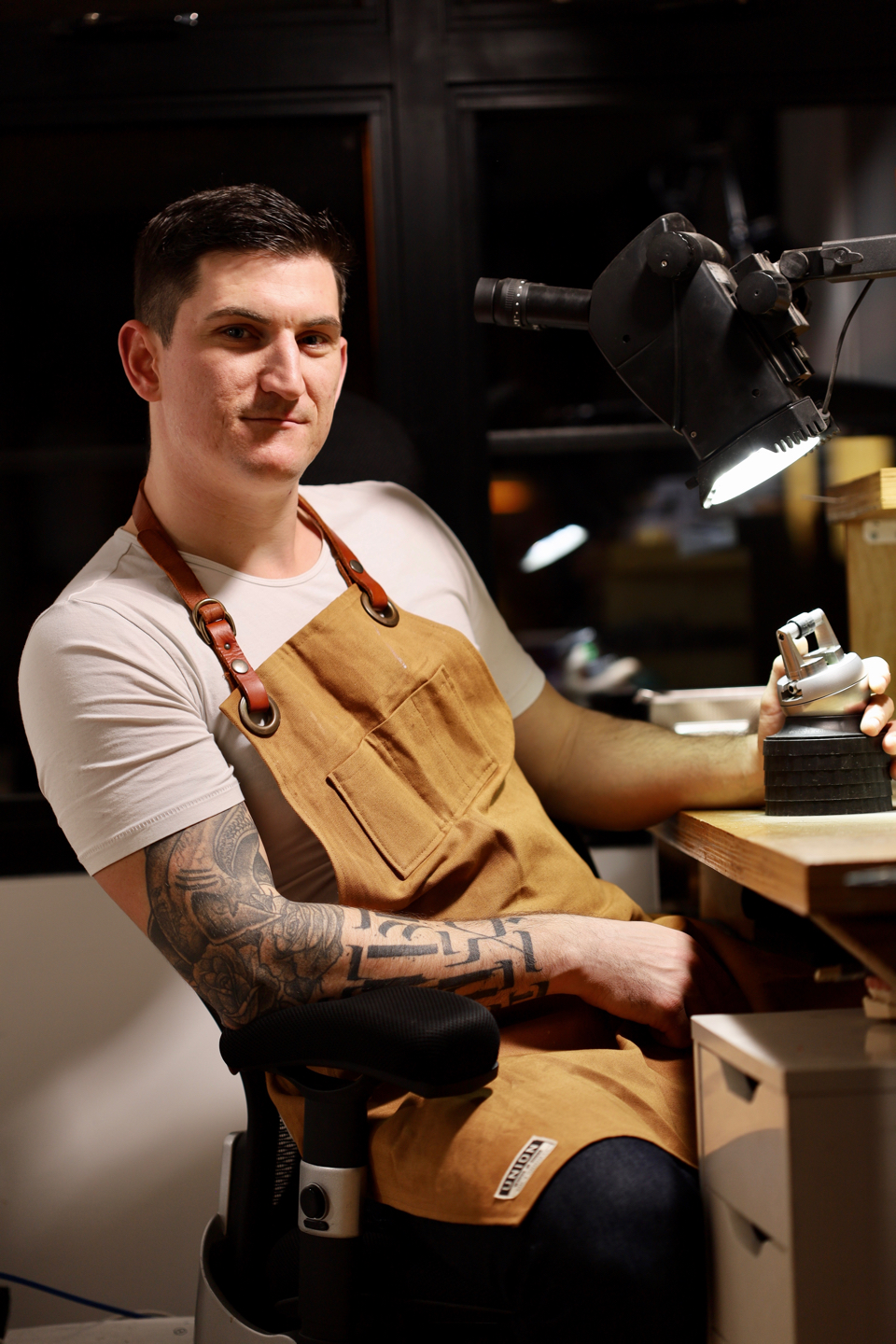
Walk into any fine jewellery store today and look at the cases. The rings with hundreds of tiny diamonds set in perfect rows — pavé, micro-pavé, grain setting. The pieces that look almost impossible to make. These aren't the exception anymore. They're the expectation.
Micro setting — the art of setting very small diamonds, often 1.3mm and below, with millimetre precision — has moved from the elite workshops of Antwerp and St. Petersburg to the mainstream of fine jewellery production. Brands that once reserved it for their top tier now use it across their lines. And the industry has a problem: there are nowhere near enough people who can do it.
How Micro Setting Conquered Fine Jewellery
Twenty years ago, micro setting was genuinely esoteric — the kind of work done in closed workshops by craftsmen who'd spent decades developing their technique, usually under masters who had no interest in sharing what they knew. The knowledge existed in tight circles in a handful of cities. It did not travel well.
Several things changed simultaneously. CAD and 3D printing made it possible to produce settings of extraordinary precision at scale, which meant designers could spec micro-setting work with confidence that the mount would be right. Consumer taste shifted toward diamond-heavy designs. Social media made the most spectacular pieces visible globally. Demand built fast.
The supply of trained setters did not build with it.
The houses that once kept micro setting a carefully guarded mystery are now quietly desperate for trained setters who can deliver this work at quality. That's an extraordinary career opportunity for anyone willing to develop the skill seriously.
What Micro Setting Actually Is
The term covers several related techniques. Pavé setting involves setting small stones in a bed of metal with raised beads holding each stone. Micro-pavé is the same, but with stones typically under 1.5mm, requiring finer tools and more precise work. Grain setting uses individual raised beads. Fishtail setting creates a distinctive pattern with two beads per stone, producing that characteristic textured shimmer.
What all of these share: they require proper training, quality tools, and patience. You cannot rush micro setting. You cannot fake it. The result either looks right — precise, consistent, professional — or it doesn't.
The Career Opportunity
The practical reality of this skills shortage is simple: a setter who can deliver professional-quality micro setting work is genuinely valuable. Studios that produce fine jewellery are actively looking for this skill. Brands that outsource their setting work are looking for it. Independent jewellers who want to offer higher-complexity pieces are looking for it.
This is not the career landscape that existed for setters twenty years ago, when the routes in were long, slow, and deeply dependent on geography. You almost had to be in London, Antwerp, or New York to access the training and the workshops that taught this level of work.
That's no longer true. Quality instruction in micro setting is now accessible online, and the market for the skill is global.
What It Takes to Learn
Honest answer: it takes time and proper instruction. This is not a skill you develop from YouTube videos and forum posts. The technique involves spatial reasoning, hand-eye coordination, tool knowledge, and accumulated muscle memory — things that build with structured practice under proper guidance.
Most people who attempt to self-teach micro setting plateau early and frustratingly. They develop habits that feel fine but produce inconsistent results. Without someone experienced enough to identify and correct those habits, progress stalls.
The good news: with the right instruction, the learning curve is accelerated dramatically. Students who come through proper structured training reach a working professional standard faster than people who've been struggling on their own for years. The instruction is the shortcut.
Where to Start
If you're serious about developing this skill professionally, the path is: get the right foundation (basic bezel and claw setting first, so your fundamentals are solid), acquire quality tools (see the equipment guide), and find instruction that's specifically designed to build micro-setting skills progressively.
The Microsetting Academy curriculum is built exactly for this — starting from correct fundamentals, moving through progressively demanding setting types, with the goal of producing setters who can work at a professional level. It's the instruction I wish I'd had when I was learning.